Showing posts with label Attack. Show all posts

Tuesday, January 10, 2012

Movsesian - Kasparov (2000), Rxc3 in the Najdorf

Movsesian - Kasparov (2000)
A game too good not to annotate!

I stumbled on this game the way any Najdorf player would: by typing in 'Kasparov 0-1' and clicking wildly. What really gets me about this game are two things:
  1. After the Rxc3 exchange sac, what wins the game is typical Najdorf play- the exchange sac simply makes the usual themes stronger.  
  2. The old cliché "use every piece in the attack" is demonstrated pretty damn well!
  3. And... In every club you have players who pick "systems" against a range of openings. Against the Sicilian the most common approach of a player who wants to get by with as little opening theory as possible is to play f3, 0-0-0, Kb1, and g2-g4-g5. This game shows that against the Najdorf, "slow", unchallenging play can often see the black pieces come to life and take over the position. 


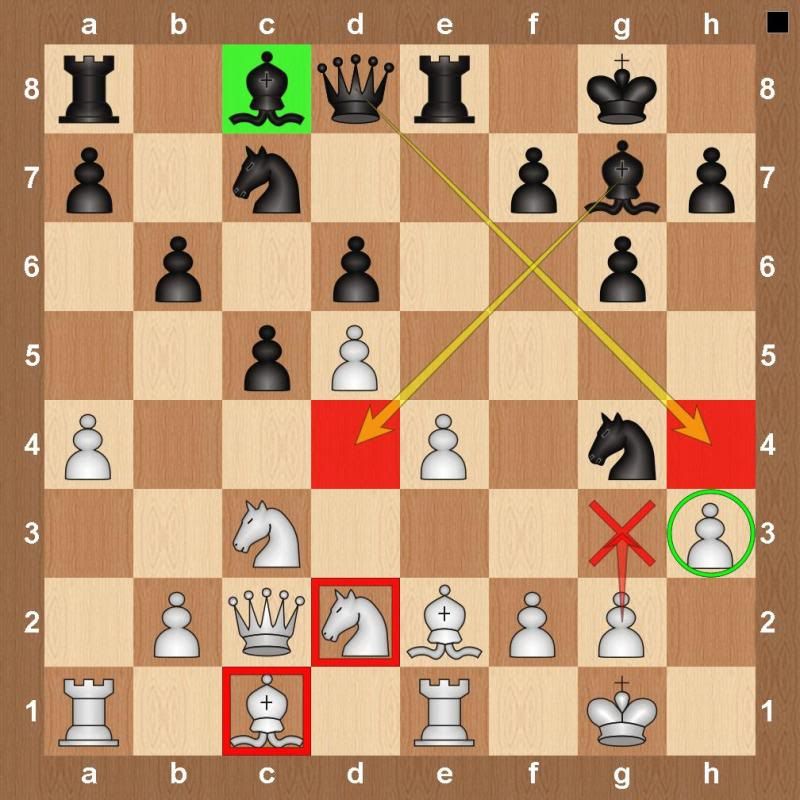
White's d2 knight and c1 Bishop defend key squares, but they also block white's Queen on e2 defending along the second rank and black's d1 Rook can't defend the open c-file. Black's play demonstrates how to take advantage of these weaknesses and use every piece in an attack.

Wednesday, June 8, 2011

Attacking the fianchetto

This week is the 5th round of the MCC Open and my opponent plays the fianchetto defences. Whilst I've been guilty (for the first time in a while!) of studying some opening lines, I'm trying to stay true to the philosophy of studying more general themes through whatever opening is relevant each week. On pulling out a few attacking manuals and flipping to the "attacking the fianchetto castled position" chapters, I've gone through some great games.

The first is a win by Mikhail Tal which features all three techniques against the fianchetto that i'll be focusing on:

1) "The Benoni Jump" which features a knight jumping in to f5 after white has played g4 and usually a rook to g1. The knight obviously threatens the defensive Bishop and the dark squares around the black king as well as opening the g-file after gxf5, gxf5.


2. Pushing the h-pawn. The fact that black has played g6 means that white's h (or f!) pawn can come into contact with black's defensive shield a move earlier than usual. What is impressive in this game is how long Tal maintains the tension before playing an eventual hxg6.

3. Lining up Queen and Bishop on the dark squares


The second game is the very famous Karpov - Korchnoi game II from the 1972 candidates final, an important moment for the Yugoslav Attack against the Sicilian Dragon. Karpov's novelty 19. Rd3 caused a change in Dragon theory with h5 to block white's h4-h5 push often played by Dragon players today.


This game, as is often the case in the St. George attack, features a lot of the tactical theme "deflection" and "removing the guard" (the f6 knight). If you haven't seen the game before, take the time not to treat it as the "theory" it has become- personally I've never looked at these lines out of disdain for the 'memory-work' the Yugoslav requires, but once you start to look at the reasons behind each move rather than just look at it as a variation 26000 sixteen-hundred players have memorised, then you can appreciate it and learn from it.


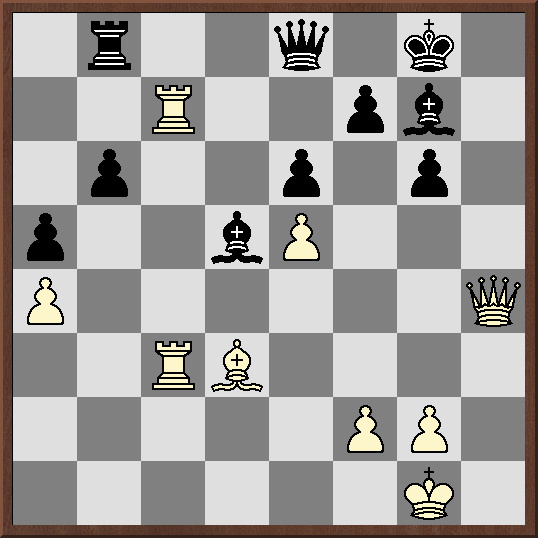
Finally- here's a random tactic! White to play and win, enjoy!

Saturday, November 6, 2010

Attacking the orthodox castled position

ATTACK: THE ORTHODOX CASTLED POSITION

So the quest continues, to learn the fundamentals of this game before the opening theory, and hopefully pick up some opening knowledge along the way.

Knowing how to attack in general rather than just a few set patterns of attack from openings (like pushing the h-pawn against the dragon, or bringing the white Queen to the dark squares via e1 in the Grand Prix attack), is far more useful. It's far more noble too- you'll get a lot more out of chess if you learn it's spirit rather than memorise a few movements.

Most attacks are based on making weaknesses in the castled position then exploiting them. Last post I mentioned the Queen/light squared Bishop battery (in lots of Queen's pawn openings), on the white squares hitting h7, paired with maneuvers to weaken black's defense of h7 like Bg5, e4-e5 etc. Anyway! Let's look at a few more examples:

1. Azmaiparashvili - Rashovsky
"Going for the jugular!" A cliché yes, but I can't think of any other way to describe this game. White offers e4 for rapid development, plays an early f4 and I can't imagine a quicker attack really!
game continues below;)


So... what can this game teach you? I don't think you (or Azmaiparashvili) calculate attacks like that all the way through, but it does show you 2 things you can remember: firstly, pushing away the kingside defence and organising your game to attack the weak points that creates. and (B): tempo is your friend.
*You can also find this game annotated in Jacob Aagard's fantastic "attacking manual" video series


2. Steinitz V Macdonnell
"attack the weakest point in your opponent's defence"
This game shows you how far defending has come since the old days. Definitely not played in the style of today, but it illustrates two important ideas: cramped positions, and attacking the weakest point.


_____________________________________________________________________________________
a typical plan for white in the 'Sozin'

Not sure if anyone can make sense of that or if it just makes things more confusing!! To weaken d5 white usually:
  • Plays Bg5 and swaps Bish for Knight on f6.
  • pushes the f-pawn up the board forcing black to play e5 leaving a hole on his target d5.
  • Remove the final black defender of d5 by swinging his d4 knight to e2, g3, then h5 and swapping on f6 again. He'll then have a minor positional advantage
Any Sozin players looking for some general annotations can check out John Emms' "Simple Chess" which has 3 or 4 Sozin's in the "outposts" chapter.
_____________________________________________________________________________________

Ok, so I lied- I promised to show some simple attacking maneuvers and ended up showing a couple of crazy games with totally different themes... next time!

Thursday, November 4, 2010

Learning Logically


For something entirely cognitive you'd have thought that by now some bearded team of psychologists would've come up with a definitive study method to drill in chess. "Study the end game first the opening last, go through master games, repeat sets of tactical problems, play 1. e4 when you get started, vary your openings, annotate your games blah blah blah blah!" It's all good advice, but I think it lacks a sequence.

For example, annotating games has been really useful for me recently. I've got to a point where I can take a master game, look through it and recognise some positional ideas by myself with no outside notes and learn from it. But I never could've done that if I hadn't spent a month going through general middle-game and positional books beforehand. And it's exactly the same annotating your own games- you can't annotate your own games unless you have some type of positional knowledge to help you realise where and why you might have gone wrong.

I remember when I used to annotate my games 3 years ago: I'd put it through Fritz and say "oh, this is a mistake because he goes here, I go there, then he goes here and he's going to win the bishop pair: - .88" : the fact is that this doesn't improve your 'positional' understanding or help you make the correct decision next time. Now, I still make a lot of positional mistakes in my games, but at least when I go through them I can clearly see why they're positional errors. So, what I'm saying is that "study master games" and "annotate your games" is not particularly good advice to an improving player because it's imcomplete. The correct advice would be "go through a general/positional text until you understand the concepts in it, then you can start to meaningfully annotate games."

Another piece of misleading advice is "until you're 1800 your first name is tactics, middle name is tactics and last name is tactics". Whilst this is totally true, and it's obvious that the easiest way to improve from 1500-1700 is to go through a few tactics books, it can also be totally stupid. For example, learning "how to build an attack" is totally different to spotting a combination. The fact is that about 40% of most tactics books are mating problems, and it makes absolutely no sense to spend that much time learning how to put the finishing touches on an attack, before you've gone through a book like Vukovic's "art of attack" which will give you some understanding of how to build one. In the last year I've done around 5000 tactical problems, only now do I realise that all of that time is not being used correctly, because I don't know how to attack. I've been complaining recently that "tactics never seem to appear in my games anymore" - I see the ones against me, and of my last 11 games... I think I've landed one tactical blow. Studying how to build an attack is going to maximise the worth of time I've spent studying tactics, that and strategy is what I'm focusing on now.

Finally, before I go through some games two more points: I recently watched a documentary starring Susan Polgar called "My Brilliant Brain" which gave Ms. Polgar an MRI scan whilst she was reflecting on some of her previous games. Whilst she was in the scanner they also showed her some pictures of famous chess icons through history. What they found was that the part of the brain that lit up when she was shown the faces of chess icons (let's call it the "facial recognition" part of the brain) was exactly the same part of the brain that lit up when she was shown her previous games. The inference they drew from this was that Susan used recognition of stored patterns more than "rational thought" when she played chess. Frank Lekkas pointed out to me that he thought the test was totally unfair because she's being shown games she's previously played so obviously she's not going to think about them like normal chess positions, she's just going to remember the sequences she previously thought of. That is totally true, but I think the example shows something pretty important too- we all look to FMs IMs and GMs for advice, but the experience of a club player and a GM playing a game is totally different. For a GM, memory and stored patterns play a huge part, a club player however uses a far greater component of "rational or logical thought".

And lastly- know at least one ending well. King and pawn endings or rook endings for example. I think it's infinitely useful to be able to swap down into an ending you know is winning and know how to win -it gives a whole new dimension to your play. Having said that, it obviously doesn't make sense to study too much of the end game while you're still getting smashed by tactical blows in the middle game!


ATTACKING THE ORTHODOX CASTLED POSITION


"This formation is considered the toughest to break down because it presents the fewest potential weak points as compared to the fianchettoed position. The prime aim of any attack against the orthodox castled position must be to provoke a weakness in its structure in order to focus the attack there. A common battery used to force the weakening pawn move g6 or h6 is the Queen lined up on the b1-h7 diagonal in front of the King's Bishop (or Q+B on the a1-h8 diagonal to force f6)... and the removal of the Nf6 defender." (From the Modern Art of Attack, 1988) Obviously the typical manouvers are e4-e5 to push away the Nf6 defender, if g6 has been played f2-f5 and h2-h5, and if h6 has been played g2-g5 to open the h-file.


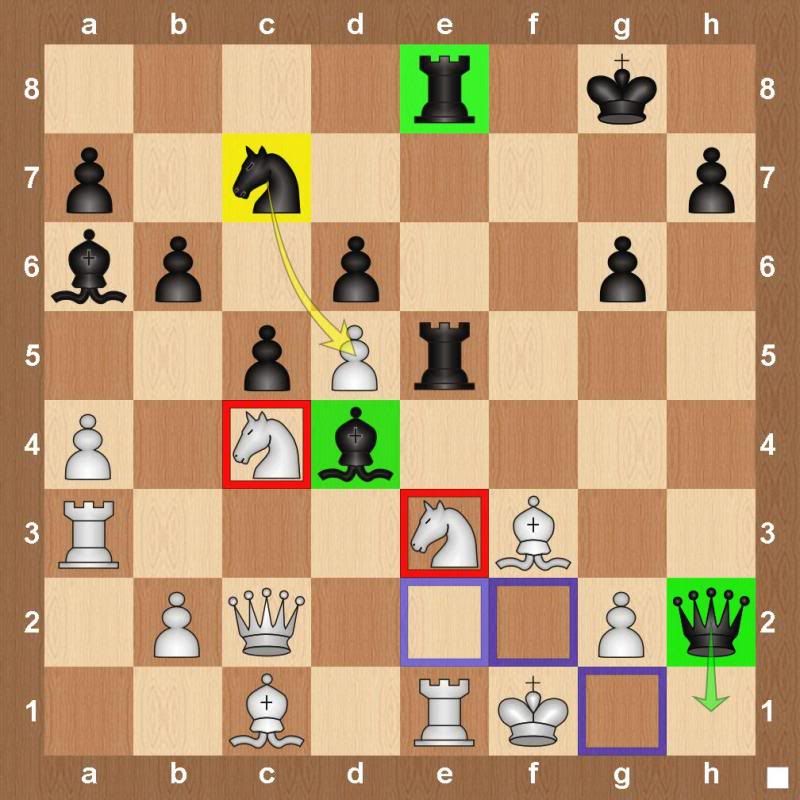
Things we should notice about this position:
  1. h3 has weakened white's control of the dark squares.
  2. Re1 has weakened white's defence of f2- particularly the defence of the g1-a7 diagonal which the fianchettoed Bishop threatens. For example white cannot meet Bd4+ by giving back an exchange with Rf2, he simply has to suffer an attack on the dark squares.
  3. White's Nd2 is awkwardly placed, blocking his dark squared Bishop's defence of the dark squares.
  4. Intuitively we can see white's pieces are in each other's way and it will take him another couple of moves to coordinate them well.


and a quick miniature:


(From Cozen's "lessons in chess strategy")

and.. I'll go out with a problem: black to play and win